

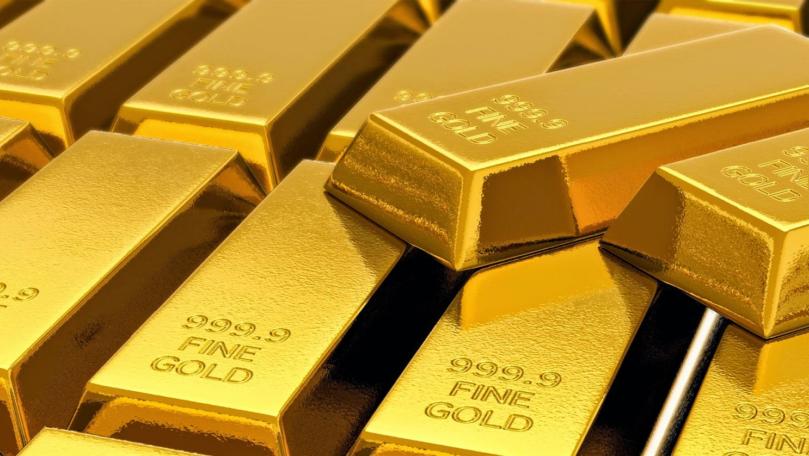
Gold’s recent historic surge is no longer a mere fluctuation within the precious metals market, nor can it be interpreted simply as a traditional flight from risk. What is unfolding across global trading floors appears to be a profound structural shift in how sovereign nations and private investors view money itself. It signals a decaying confidence in a global monetary system built on the US dollar, treasury bonds, and fiat currencies.
Following historic gains of 64.4% throughout 2025—its strongest performance since 1979—gold reached an all-time nominal high of $5,595 per ounce in January 2026. Data from Trading Economics points out that the yellow metal briefly touched a historic peak near $5,608 during the same month before undergoing a corrective consolidation down to approximately $4,516 by May 22, 2026. This healthy correction, however, does not erase the fact that gold prices remain roughly 34.5% higher than during the same period last year.
Beyond the Numbers: A Crisis of Trust
The true narrative lies beneath the raw numbers. Gold is no longer moving solely in response to localized geopolitical fears, inflation spikes, or a weakening dollar. Instead, it reflects an intensifying skepticism regarding the long-term sustainability of the international financial architecture. With global debt spiraling out of control, financial sanctions weaponized for political leverage, and intensifying discussions around central bank reserve diversification away from the greenback, gold has reclaimed center stage. It remains the ultimate asset that is issued by no state, bound to no central bank decree, and immune to the sweeping asset-freezing mechanisms that plague traditional financial instruments.
An economic analyst closely tracking the commodities market stated that:
“The explosive rise of gold is not just a speculative wave; it is a silent vote by global markets against an international crisis of confidence. What we are witnessing today is gold transitioning from a defensive safe-haven asset into a neutral reserve asset—the ultimate mechanism that sovereign states and macro investors flee to when the systemic questions surpass standard inflation and interest rate concerns.”
The Era of Public Influx
This macroeconomic reading is heavily backed by empirical data published by the World Gold Council (WGC). In the first quarter of 2026, global gold demand—inclusive of over-the-counter (OTC) transactions—reached 1,231 tons, marking a 2% year-on-year increase. Crucially, the total financial value of that demand skyrocketed by 74% to a record-breaking $193 billion, driven entirely by the exponential price appreciation. Furthermore, consumer demand for physical gold bars and coins surged to 474 tons (a 42% spike), marking the second-highest quarterly level ever recorded.
This shifts the market dynamics entirely. The gold space is no longer restricted to institutional central banks or top-tier wealth managers. According to financial sources, the asset has entered a “retail participation phase.” This is the precise stage where individual retail investors, private wealth funds, and everyday savers aggressively jump on board the bullish trend. Historically, this phase tends to be the most prolonged in secular bull cycles because it transitions gold from an asset institutional desks accumulate quietly to one embedded deep within global public consciousness.
The Long-Term Outlook: Is $9,000 Next?
The long-term structural bull market for gold appears far from exhausted. Prominent alternative macro-models suggest the commodity could realistically target $8,900 per ounce by the end of the decade, provided that the “re-monetization” dynamics of gold accelerate on a global scale. While this trajectory is an analytical model rather than a guaranteed certainty, it highlights a growing consensus that gold is no longer behaving like a mere raw commodity, but rather as an anchor in a broader realignment of the global financial order.
Conversely, the road ahead will naturally feature sharp, volatile corrections. Price levels this elevated inherently place heavy downward pressure on consumer demand, particularly within the jewelry sector, and will inevitably trigger periodic institutional profit-taking. The World Gold Council explicitly noted that while jewelry demand will likely remain under duress due to prohibitive costs, structural support from investment portfolios and central bank accumulation will hold firm, keeping gold highly sensitive to ongoing geopolitical flashpoints throughout 2026.
Ultimately, gold’s macro trajectory and its potential to eye the $9,000 threshold confirm that the global financial paradigm is shifting. What is transpiring behind closed doors suggests that hard assets, rather than central bank policies, may soon dictate global wealth, leaving the markets with the absolute first and final word.
