

Exclusive JNews Lebanon
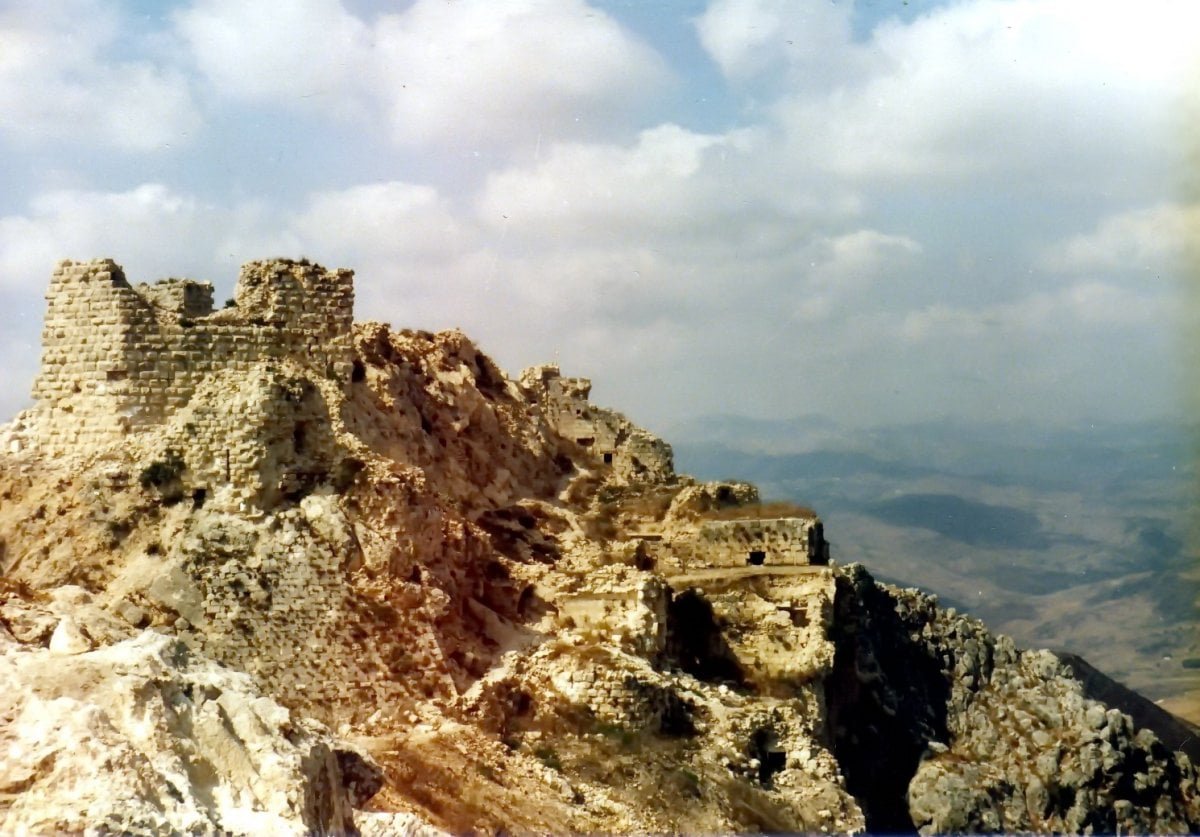
The raising of the Israeli flag and the Golani Brigade flag over the historic Beaufort (Shaqif) Castle, was not merely a passing battlefield development. Instead, it delivered a profound political and military shock that threw Lebanese citizens a quarter-century back, specifically to the pre-2000 withdrawal era. This towering citadel, which commands the geography of the south and controls its strategic axes, sees its fall into the hands of the occupation open up the front north of the Litani River and the outskirts of Nabatieh to terrifying existential possibilities. As military operations—which launched under the banner of “Supporting Iran” on March 2nd—enter their fourth month, leaving behind a heavy bloody toll of 3,371 martyrs and 10,129 injured, cross-referenced diplomatic sources tell JNews Lebanon that Lebanon stands completely exposed in a global game of geopolitical partitioning, where the south has been turned into a burning mailbox for trading draft nuclear agreements between Washington and Tehran.
Behind the Scenes of Negotiating Under Fire
Just hours before the launch of the new round of political negotiations in Washington (June 2 and 3), JNews diplomatic sources read into the latest Israeli escalation a clear attempt to impose a “negotiating under fire” equation. Hebrew media leaks confirm this trajectory; Channel 13 revealed a military plan presented to Benjamin Netanyahu and his Defense Minister Yoav Gallant, which includes expanding military operations to reach deep into Lebanon alongside executing strikes in the capital, Beirut. This is synchronized with a hysterical wave of evacuation warnings aimed at displacing hundreds of thousands of residents from Nabatieh and the Western Beqaa. This military madness adopted by Israel seeks to extract forced political concessions from the Lebanese negotiating delegation, stripping it of its cards of strength just before sitting down at the US State Department in front of an American mediator that many view as a partner covering the operation, especially after the recent Pentagon meeting.
Read also Exclusive- Inside the Pentagon: What the Lebanese Delegation Told Israel
The Crisis-Ridden Mediation
On the other hand, private sources told JNews Lebanon about complex political dimensions accompanying the emergency French move in New York to request an extraordinary UN Security Council session tomorrow. According to the diplomatic atmosphere tracked by our site, Paris carries behind its closed doors a heavy reproach toward the Lebanese authority’s unilateral move to engage in bilateral negotiations in Washington without prior coordination with the Élysée, which left the state exposed and bearing individual responsibility before the American-Israeli guillotine. With the arrival of presidential envoy Jean-Yves Le Drian in Beirut next Wednesday, France is trying to regain its lost role as a mediator possessing direct communication channels with Hezbollah to find a flexible formula to “contain and freeze” weapons, despite prior awareness that any French resolution in the Security Council will inevitably collide with the wall of the US veto, ready to protect the Israeli momentum.
The Guarantees of Ain al-Tineh and the Baabda Dilemma
Internally, the scene reflects sharp division and official disarray. Despite the political outcry launched by Prime Minister Najib Mikati from Baabda following his evaluative meeting with President Joseph Aoun, where he considered negotiations “the least costly option and not a surrender” while explicitly calling on Hezbollah to back down from “unilateralism and stubbornness,” the domestic clash remains fierce. This is evident in MP Ali Fayyad’s insistence on the choice of open confrontation despite his public admission of a “flaw in the balance of power” at the expense of the remains of southerners and their wiped-out villages.
Read also Exclusive- Inside the Pentagon: What the Lebanese Delegation Told Israel
In an attempt to salvage what can be saved, JNews Lebanon learned that Speaker Nabih Berri passed a cable to the Lebanese negotiating delegation guaranteeing a complete, comprehensive, and immediate commitment to a ceasefire by the resistance if Israel commits to a comprehensive withdrawal. However, the question imposed by the reality of the battlefield remains unanswered: “Who obligates Israel to halt its comprehensive aggression?” Today, according to our analytical reading, the ultimate solution hangs entirely on a signal from Donald Trump’s finger. As long as the White House gives the green light to Netanyahu, Lebanese sovereignty will continue to pay the price in iron, fire, and tears at the doorstep of grand settlements.
