

Written by khoder Farhat for JNews Lebanon
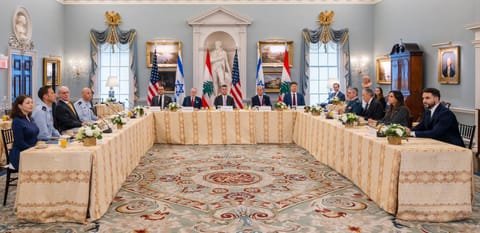
As the countdown begins for early September, diplomatic and political circles in Beirut are witnessing intense preparatory activity ahead of the eighth round of Lebanese-Israeli negotiations in Rome. Contrary to suggestions that the September meeting will be purely ceremonial, a look behind the scenes Rome negotiations September reveals that consultations across Beirut, Jerusalem, and Washington have evolved into a race to establish field parameters before technical talks resume.
Exclusive Jnews: What Is Lebanon Bringing to Rome? Detailed Maps and Expanding Pilot Zones
Diplomatic sources informed “Jnews Lebanon” that recent meetings in Beirut, along with upcoming consultations in Washington and Jerusalem ahead of the Rome session, are focusing on preparing detailed implementation roadmaps drafted by Lebanese officials in coordination with military leadership.
Information obtained by “Jnews Lebanon” indicates that Lebanese delegates plan to propose expanding the initial pilot model—tested across Zautar al-Gharbiya, Froon, and Ghandouriya—to cover critical southern sectors south of the Litani River, specifically around Bint Jbeil and Khiam. Lebanon aims to secure firm, written commitments guaranteed by Washington to ensure reciprocal step-by-step implementation on the ground.
Beirut’s Prerequisites: Halting Land Clearance and Securing Pre-Session Commitments
Key information acquired by “Jnews Lebanon” reveals that Lebanese leadership communicated three essential prerequisites to American mediators and U.S. Ambassador to Lebanon Michel Issa to ensure the effectiveness of the upcoming talks:
- First: Establishing a comprehensive freeze on military actions and daily air violations ahead of the formal session.
- Second: Enforcing an immediate halt to land clearance operations and property destruction along border villages south of the Litani.
Third: Formally agreeing on clear third-party verification protocols managed via Major General Joseph Clearfield and the coordination mechanism to ensure objective field oversight.
Diplomatic Momentum vs. Field Realities: Lebanon’s Negotiation Position
Sources further noted to “Jnews Lebanon” that optimistic signals from U.S. diplomats, reiterated by Ambassador Michel Issa following his meeting at the Orthodox Patriarchate in Balamand, reflect Washington’s intent to sustain diplomatic progress in the region ahead of October political cycles in Israel.
However, the Lebanese delegation, led by Ambassador Simon Karam—who previously demonstrated a firm stance by suspending a previous session in Rome two hours early—has made it clear to mediators that progress depends entirely on establishing verifiable, balanced field measures rather than open-ended discussions.
Assessing the September Rome Session
A strategic evaluation by Jnews Lebanon outlines three pivotal dimensions shaping the upcoming Rome round:
- Testing Mediation Commitments: The September round will serve as a definitive test of international mediation in securing an end to field escalations and land alterations.
- Expanding Security Models: Extending security arrangements toward key hubs like Bint Jbeil and Khiam represents a critical step for broader stabilization south of the Litani River.
- Linking Security with Field Recovery: Ongoing diplomatic efforts emphasize that operational security measures must be accompanied by structured reconstruction plans to ensure long-term regional stability.
“Senior Diplomatic Source to Jnews: Discussions in Rome are reaching crucial operational details… The implementation maps presented by Lebanon for early September will place all participating parties before clear commitments: establishing field stability or facing renewed procedural delays.”
