

Exclusive JNews Lebanon
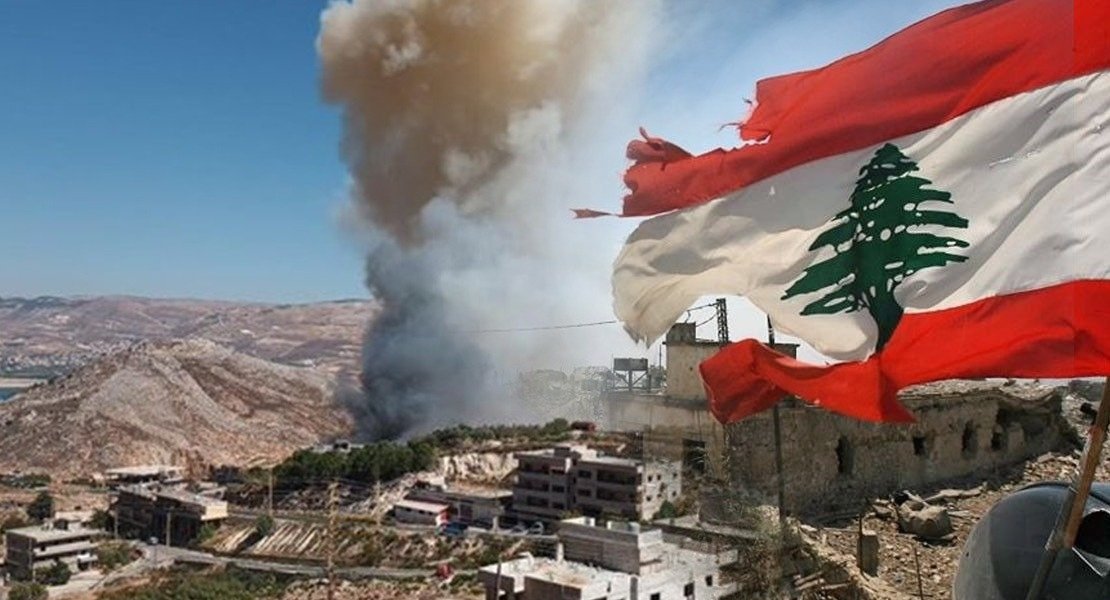
The Middle East has entered its most perilous military and political detour in decades. The conflict is no longer confined to proxy confrontations; it has transformed into a direct, violent clash between Washington and Tehran. Meanwhile, Lebanon marks its 100th day since the outbreak of the war between Israel and Hezbollah on March 2. The conflict has yielded a catastrophic toll, nearing 4,000 dead and 12,000 wounded, with entire villages reduced to barren, blackened landscapes.
Read also The Roundup- From Baabda to Islamabad: Lebanon Facing its “Final Critical Hour”
The US-Iran Front: Finger on the Trigger and Threats to Strike Energy and Bridges
The US Central Command (CENTCOM) announced the completion of a new wave of destructive airstrikes inside Iran, acting under direct orders from President Donald Trump. The strikes targeted military surveillance systems, communications, and air defense sites across various regions. Explosions shook the southern cities of Minab and Sirik, while air defense systems were activated west of Tehran.
This comprehensive escalation came under the pretext of Iran shooting down a US Apache helicopter. Consequently, Trump retreated from his rhetoric of an imminent deal, threatening to strike Iranian bridges and power stations if Tehran continues to stall on signing the anticipated agreement.
Read also Following the US Attack… This Is What Iran Just Announced!
Exclusive Behind-the-Scenes via Jnews Lebanon: The Fate of the June 22 Round and the “US State Department” Proposal
On the Lebanese diplomatic track, all eyes are on the fate of the fifth round of direct negotiations between Lebanon and Israel, mediated by the United States and scheduled for June 22.
In this context, Jnews Lebanon has obtained exclusive information from well-informed diplomatic sources revealing the following:
- Israeli Reluctance: Our sources confirm that the Israeli side was fundamentally unconvinced by the atmosphere of the previous round of talks held in Washington on June 2 and 3, showing no enthusiasm for the proposed negotiating frameworks. According to our information, a member of the Lebanese delegation sharply addressed the Israeli delegation, stating: “By your intransigence, you are serving Iran, not Lebanon.”
- Washington’s New Proposal: Sources revealed to Jnews Lebanon that Washington, in an attempt to salvage the diplomatic track, has proposed holding the upcoming military and political negotiation round on its scheduled date (June 22), but inside the US Department of State headquarters in Washington, to lend a more serious and binding character to the procedural and security points.
- Ambassador “Michael Issa’s” Mobilization: These preparations coincide with a shuttle diplomacy effort by US Ambassador to Beirut, Michael Issa, who visited “Ain el-Tineh” aiming to convince Parliament Speaker Nabih Berri, and through him Hezbollah, to adopt the “Experimental Zones” proposal and commit to a comprehensive ceasefire as the first executive phase of the agreement.
Read also Behind the scenes- Provocative Diplomatic Signals
Regional Conflict and Levant Balances
Diplomatic atmospheres intersect at the impossibility of separating the Lebanese negotiating path from the US-Iranian track, despite dense regional mediation efforts spanning Pakistan, Qatar, and Oman.
In this context, prominent regional dynamics have emerged, analyzed by our sources:
- Erdogan’s Equation: Turkish President Recep Tayyip Erdogan entered the conflict forcefully, declaring that “Turkey’s security begins in Damascus, Aleppo, and Beirut.” This serves as a clear warning against the expansion of Israeli influence, reflecting Turkish-Gulf anxieties over the birth of a “New Middle East” where Syria is weaker, Lebanon is more fragile, and Kurdish entities gain greater independence.
- The Firm Egyptian Stance: What the US Ambassador did not state directly from Ain el-Tineh was expressed decisively by the Egyptian Ambassador from the second presidency headquarters. He announced his country’s rejection of the “Northern Israel vs. Dahiyeh” equation, insisting on a complete Israeli withdrawal and the extension of state authority over all Lebanese territory, hinting that any breakthrough in the “Islamabad” file would inevitably reflect on Lebanon.
A New International Track
On another note, for the first time since the war broke out on March 2, the United Nations has entered the crisis from a human rights perspective. International sources revealed an official agreement between the Lebanese government and the UN High Commissioner for Human Rights, Volker Türk, to soon dispatch an independent and impartial assessment mission and an investigative team to Lebanon. The team will begin gathering evidence on potential “war violations” and international human rights abuses committed by all parties to the conflict since the start of hostilities.
Today, Lebanon finds itself hostage to a “destructive war of attrition” led by the Israeli military machine, at a time when Hezbollah stands in a difficult defensive position against Israeli aerial and technical superiority.
Between Tehran’s regional calculations and Lebanon’s national interest, the stakes remain high for June 22. Either Washington succeeds in imposing the “Experimental Zones” agenda and a ceasefire through the gates of its State Department, or the US-Iranian war clouds will shatter diplomacy, pushing the entire region into the unknown.
