

Written by Joyce Houeiss for JNews Lebanon
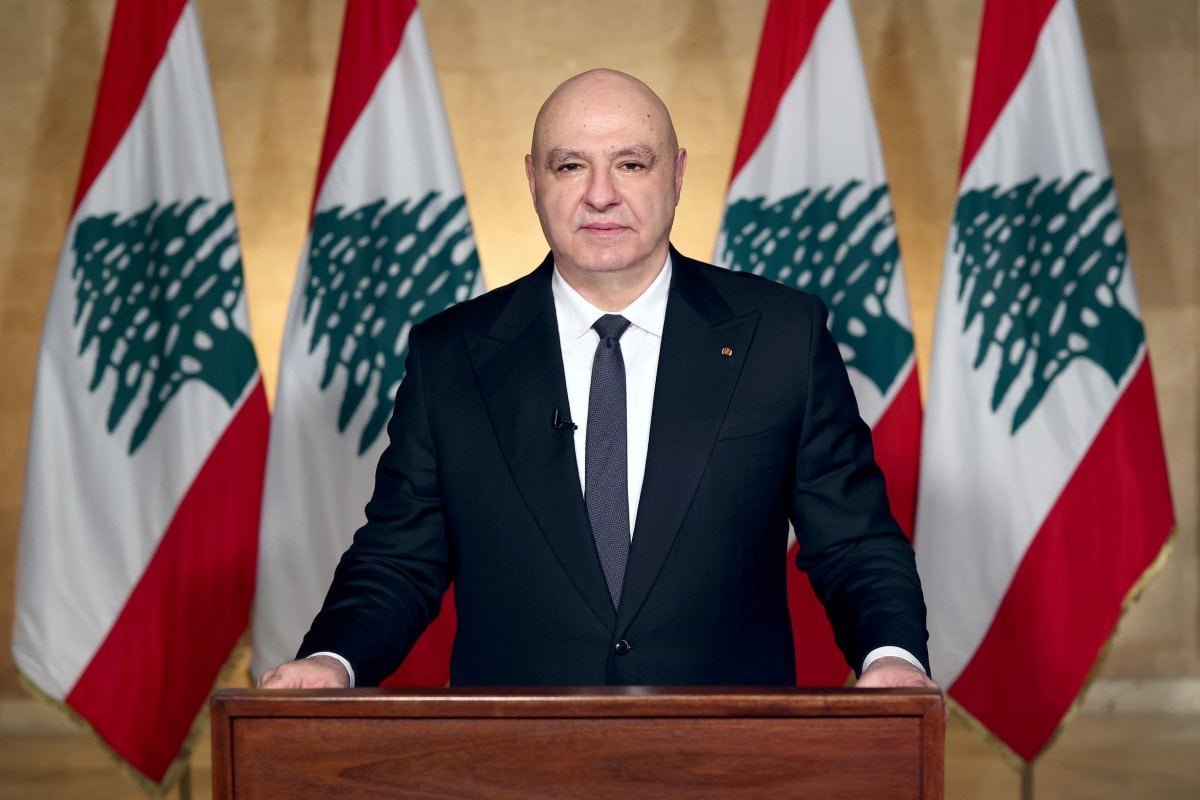
The recent appearance of the first presidential authority on the American “CNN” network was not merely a tactical media maneuver at a critical juncture. Rather, from a methodical political standpoint, it represented the formulation of a “new sovereign doctrine” that transcends the conventional compromise-driven rhetoric that has governed Lebanon for decades.
This stance, delivered in the second part of the interview amidst highly complex regional and international intersections, put a decisive end to the “duality of power” that had long disrupted the structural concept of the state. It explicitly refuted the equations of shared regional fronts (“unity of arenas”) and restored the prestige of constitutional institutions as the exclusive and sole channel for international negotiation and crisis management.
Read also Behind the scenes- The Berri-Sharaa Line
Decoding the Presidential Warning: Structural Disengagement
According to an analytical reading conducted by Jnews Lebanon sources with diplomatic circles, the presidential approach to the file of illicit weapons moved past local political bickering to touch upon the country’s deeper sociological reality. The presidential emphasis that “the systematic refusal to hand over weapons or integrate under the mantle of the state will inevitably lead to popular isolation and a societal disengagement” represents an accurate monitoring of the shifting Lebanese public mood, which is no longer able to absorb the costs of cross-border strategies.
Intersecting data obtained by our site indicates that the presidential discourse deliberately distinguished between Lebanese societal components and armed organizational structures. It positioned the umbrella of legitimacy as the safest option to integrate everyone under the rule of law. Within this argument lies an implicit and cold condemnation of the erratic paths that dragged the country into the abyss of widespread destruction and massive displacement, without possessing a constitutional mandate or a unifying national consensus.
Read also The Roundup- From Baabda to Islamabad: Lebanon Facing its “Final Critical Hour”
Diplomatic Sources to Jnews Lebanon: Reclaiming the Centrality of Executive Decision-Making
On the structural level of the state, prominent political and well-informed sources revealed in exclusive statements to Jnews Lebanon that the harmonious dynamic between the two heads of the executive branch (the Presidency of the Republic and the Presidency of the Government) at this stage has successfully blocked scenarios of “institutional dissolution.” It has thwarted attempts to turn the Lebanese capital into an isolated valley or an arena annexed to regional axes, akin to extremist models in the region.
These sources explained to our site that the fundamental equation generated by this dynamic is the transformation of the executive authority from a passive state of being “acted upon” diplomatically and on the ground, into an active “constitutional actor.” This actor now leads offensive diplomacy and holds the reins of sovereign decision-making from a position of strength and parity, liberated from any restrictions or dictates imposed by the de facto militia.
The sources believe that choosing a global media platform of this scale to articulate these propositions sent a highly impactful message to decision-makers in Western capitals, particularly Washington. The successive presidential signals regarding the immediate necessity to “dismantle structures parallel to the state” and restrict weapons exclusively to the Lebanese Army placed the international community before its responsibilities in supporting legitimate institutions.
In this context, circles reveal that moving toward drafting a draft law for the “exclusivity of weapons” within constitutional channels is no longer a political luxury. Instead, it is the fundamental foundational block for building sustainable political and economic stability, enjoying broad backing from national environments that transcend sectarian alignments.
Negotiation from a Position of Sovereignty
Independent academic and political circles speaking to Jnews Lebanon agree that the current presidential behavior represents a positive break from the legacy of retreat that characterized Baabda for years. The declared presidential readiness to “go anywhere in the world” stems from the principle of safeguarding “free and independent decision-making,” rather than offering concessions or begging for solutions.
Read also Will Lebanese Citizens Watch the World Cup? A MP Reveals Details After Contacting the Minister of Information
This interview has established a clear negotiating reality: Lebanon negotiates with its constitutional authenticity, not on behalf of regional powers or armed organizations. Hence, the current presidential authority gains its legitimacy as a voice expressing the state’s essence and prestige, reshaping the scene under the banner of adhering to the “monopoly of legitimate violence” by legal military forces—the inevitable and single step that makes the state “confident in its stride” toward reclaiming its full sovereignty.
