



Written by Joyce Houeiss for JNews Lebanon
Before the joint ink on the draft of the “Washington Framework Agreement” could even dry, a parallel war of statements erupted behind the political and security scenes, placing the Lebanese state—represented by the Presidency and the Prime Minister’s Office—in direct confrontation with the regional calculations of the “Axis of Resistance.” As the fate of the fourth round of negotiations teeters under the weight of mutual conditions, detailed and highly sensitive information has been revealed to JNews Lebanon regarding hotlines opened between Ain el-Tineh and the US capital, coinciding with “firm diplomatic messages” that have placed Beirut’s southern suburb (Dahiyeh) in the eye of the storm.
Ain el-Tineh’s Breakthrough
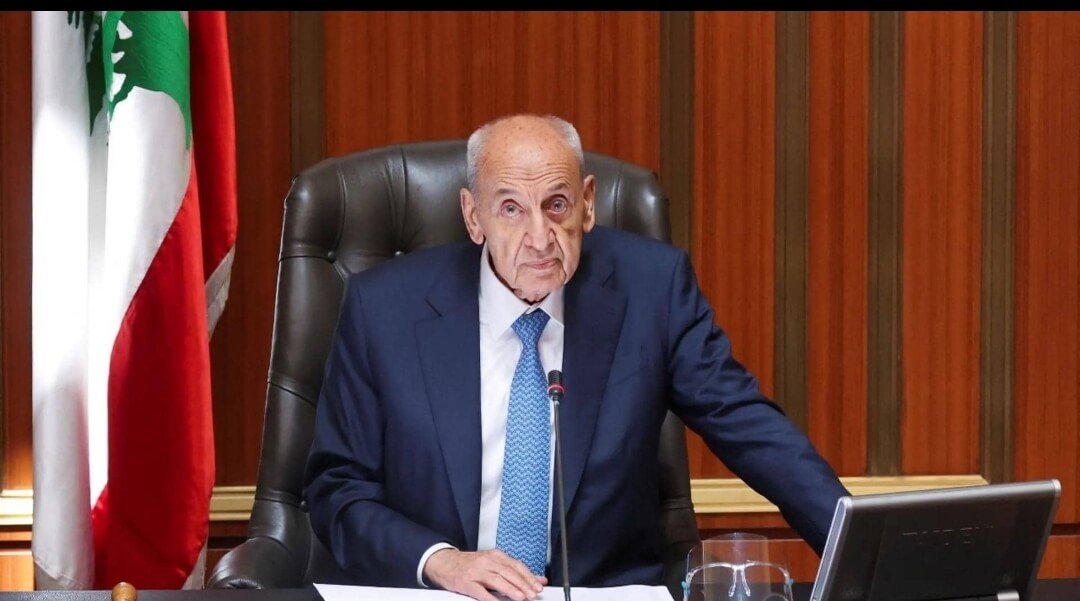
At a time when domestic positions seemed rigid, JNews Lebanon learned from highly reliable political sources that Parliament Speaker Nabih Berri is leading a rescue effort behind the scenes to prevent the complete collapse of the negotiation track. Sources reveal that Speaker Berri made a direct call to Lebanon’s Ambassador to the United States, Nada Mouawad, who is in Washington monitoring the file, presenting her with a clear message to convey to the US administration: “Ain el-Tineh guarantees Hezbollah’s full commitment to the ceasefire mechanism, provided that the halt is comprehensive, mutual, and simultaneous.”
This move by Berri reflects a “last-quarter-of-an-hour” attempt to separate the high ceilings declared by the party in its media statements from the pragmatic margin left for negotiation through the Lebanese state.
The “Party” Rebels Against Baabda
In contrast, Hezbollah’s response to the recent positions of President General Joseph Aoun, in which he described the agreement as a “last chance,” was swift. Leading sources in the party told JNews Lebanon that “the option of resistance still enjoys the support of a wide segment of Lebanese, and Secretary-General Sheikh Naim Qasim represents this orientation politically and popularly, and no agreement can bypass this reality.”
The sources directed sharp and direct criticism at Baabda’s negotiating performance, stating: “President Aoun, after four arduous rounds of negotiations, was unable to secure a basic commitment to a ceasefire. Rather, the final statement issued from the Washington negotiations was unjust, as it adopted the clause for Hezbollah’s complete withdrawal from the South, without mentioning or obliging Israel to a corresponding withdrawal from the territories it has encroached upon.”
In a related context, the party’s sources settled the ongoing controversy over other regional backstage dynamics, confirming categorically: “There is no presence of any delegation or representative of the party in the Qatari capital, Doha, at present,” indicating that the decision to negotiate is fully entrusted to Speaker Berri and direct contact with the state.
A Scorching Diplomatic Message
On the ground, western diplomatic sources revealed to JNews Lebanon that official authorities in Beirut received a “highly dangerous and firm warning message” through international channels in recent hours, stating that the US administration would not be able to restrain Netanyahu’s government if the escalation continues. The text of the message read: “Any rocket or drone launched from Lebanese territory toward Israeli settlements after the issuance of the framework declaration will be met immediately with a green light for a comprehensive and intensive targeting and destruction of the southern suburb of Beirut.”
Read also Exclusive- Does “Hezbollah” Really Plan to Blow Up the Qaraoun Dam? Here is the Full Truth
This threat coincided with a security misunderstanding regarding the southern town of Debbine. Lebanese security sources rushed to clarify the scene to our website, confirming that “the Israeli army’s withdrawal from the town of Debbine is a purely tactical field measure, and has absolutely no relation to the mechanism of ‘pilot zones’ proposed in Washington, as the agreement regarding these specific zones and towns has not entered into actual implementation yet, and awaits a comprehensive consensus on zero hour.”
Political-Military Dimensions
Amid this security volatility, a notable military development emerged. Special information obtained by JNews Lebanon confirmed that the Commander of the Lebanese Army, General Rudolf Heykal, is preparing to head on an important official visit to the Pakistani capital, Islamabad, following an urgent official invitation from his Pakistani counterpart, General Asim Munir.
Despite the customary military nature of the visit, diplomatic sources confirmed to our website that the timing gives the step highly significant political dimensions whose results will appear in the near and long term, especially within the framework of the continuous Lebanese endeavor to secure logistical and technical support for the military institution, in preparation for the anticipated deployment tasks in the South Litani region and asserting the exclusive sovereignty of the state once the international settlement matures.
Between Berri’s guarantees raised to Washington via Ambassador Mouawad, and the party’s veto on the “Baabda formula,” Lebanon remains suspended on a tightrope: either diplomacy succeeds in drafting a balanced exit, or the field explodes again under the blows of the American “green light.”
To read this article in Arabic (Click Here)