




Written by khoder Farhat for JNews Lebanon
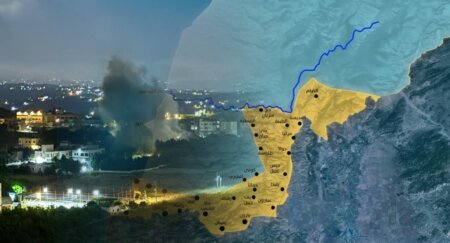
The corridors of the US capital, Washington, have once again taken center stage in Lebanese affairs. Following the conclusion of the second and final day of the fourth round of direct negotiations between Lebanon and Israel (June 2-3), the US State Department announced an agreement to solidify the fragile ceasefire through the creation of so-called “Pilot Zones” inside Lebanese territory, where any presence of Hezbollah elements is strictly prohibited.
While the Lebanese public anxiously awaits the fate of this step, wondering if it will pave the way for sustainable peace and security, a cold, highly cautious technical and military reading emerges, revealing hidden complexities that could turn this agreement into a multi-layered field trap.
Read also Exclusive- Does “Hezbollah” Really Plan to Blow Up the Qaraoun Dam? Here is the Full Truth
Katz Empties the Agreement of its Substance
Commenting on the scene in an exclusive briefing to JNews Lebanon, a military source stated: “I will not start with pessimism, but before we empty this agreement of its substance, Israeli Defense Minister Israel Katz rushed to do so himself with his definitive statement that the fighting will continue.”
The source added: “This reality means that the Lebanese government has officially committed to what Tel Aviv and Washington want. However, pending the mechanisms of implementing this commitment on the ground, the Israeli war machine continues its escalation and destruction in the South, amid an intense internal debate in Tel Aviv regarding the feasibility of the agreement.”
Read also Exclusive-The Dahieh Shockwave: A Secret US-Israeli Plan to Eliminate Weapons
This contradiction places the Lebanese state before an embarrassing timing test. The source points out that the government is required today to pursue a highly important and rapid path. Based on the declared stance of the Army Commander, General Rudolf Heikal, who previously stated that “military operations were obstructing the implementation of the government’s decision,” the army was practically waiting for the ceasefire to be established. Today, if American pressure succeeds in enforcing a calm, swift and joint action by both the government and the army becomes crucial, especially since the army possesses significant capabilities to manage this phase.
Behind the Scenes of the “Pilot Zones”
Military sources revealed to JNews Lebanon that the implementation of the “Pilot Zone” concept must practically begin deep within the southern region, leveraging a “political loophole” left by Hezbollah Secretary-General Sheikh Naim Qassem in late November 2024. At the time, Qassem welcomed the understanding and expressed readiness to implement it within the deployment zone of the international peacekeeping forces (UNIFIL)—namely, the scope of Resolution 1701—affirming that the party would not obstruct the army’s work.
Read also Exclusive- Inside the Pentagon: What the Lebanese Delegation Told Israel
“It is true that the party did not assist the army back then and was not cooperative, but it was not against its work in the region,” according to the source, recalling the major role the Lebanese Army previously played when it independently dismantled 177 tunnels and cleared 320,000 shells and pieces of weaponry in communal lands and areas outside residential zones.
Regarding the criticism directed at the military institution over the nature of its role during the past 15 months, the source explained to JNews Lebanon: “The army fulfilled its duties and more. It dedicated itself to civil defense tasks, opening roads, evacuating the wounded, searching for missing persons, and securing water and electricity. It was keen on maintaining stability but later refrained from entering inhabited homes pointed out by the Mechanism Committee. This was because whenever it entered them alongside UNIFIL, it found no weapons or anything outside state authority; yet, immediately upon its departure, Israel would bomb the house. As for the total destruction and demolitions we are witnessing today, it indicates that Israel either possesses specific intelligence or is pursuing a clear, retaliatory policy of devastation.”
Entrapment of the Army and Targeting the “Civil Network”
On the ground, the source warns against the method used to select these “Pilot Zones.” In his view, the army should start the experiment in areas far from the direct line of friction with the Israeli forces, while reactivating communication channels through the international “Mechanism” committee, as was done in the past, to give the step a chance to succeed. However, the most critical question remains: “Will the army hold the decision-making power to determine the geography of these zones? Or are there areas that Israel failed to enter militarily due to fierce resistance, and it is now seeking to entrap the Lebanese Army by pushing it to specifically name and enter these exact zones?”
Read also Exclusive – Between Peace and Collapse: JNews Reveals by Name Who Looted Depositors’ Money in 2019
In conclusion, dismissing the agreement prematurely might obscure the occupation’s deeper objective. The agreement in its current form, along with the accompanying pressures, does not stop at the boundaries of dismantling Hezbollah’s military apparatus; rather, it explicitly addresses the “dismantling of Hezbollah’s infrastructure.”
According to reality, this dismantling extends to encompass the entire parallel network and institutions: (Al-Amana gas stations, Al-Qard Al-Hasan, Jihad Al-Binaa, and housing loan projects), and everything inherently or institutionally linked to the party. We hope this cold, technical assessment proves wrong, but this is the terrifying and fateful reality that Lebanon has been placed before in Washington.