



Exclusive JNews Lebanon
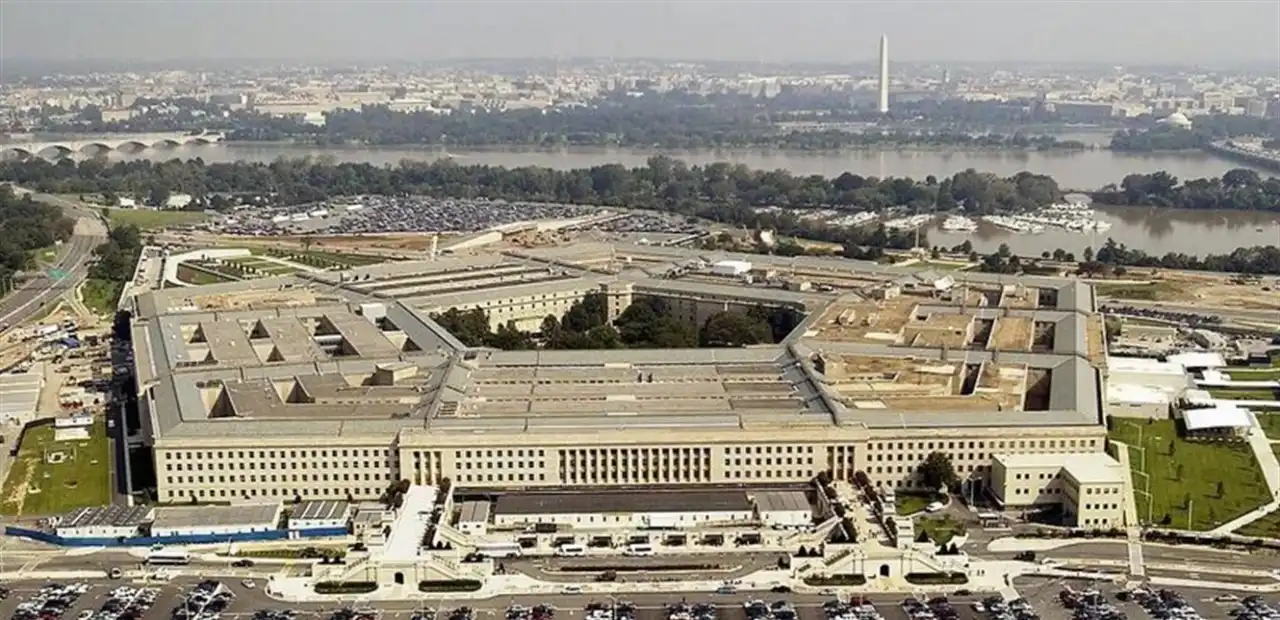
Contrary to the soft diplomacy and the brief statement issued by the US Department of Defense (the Pentagon) describing the nine-hour talks as “positive and constructive,” field and political analyses on the morning of today, Sunday, reveal that the actual outcome of the direct military negotiations has grounded at “zero results” thus far.
Read also Exclusive- Inside the Pentagon: What the Lebanese Delegation Told Israel
While Washington attempts to market technical progress to link it to the political track—whose fourth round kicks off at the US State Department on Tuesday and Wednesday (June 2 and 3)—Lebanon finds itself engaged in an existential standoff. It stands between a state seeking a ceiling to protect its sovereignty, an occupation seizing land to alter the maps, and an Iranian region exploiting the Lebanese card as a mailbox to serve its own interests through the “arrogance and unilateralism” of Hezbollah, as reflected by intersecting positions and realities.
JNews Sources Expose the Hidden Details
Deep within the heated diplomatic secrets that unfolded behind closed doors—specifically during the stormy evaluation meeting held at the Lebanese Embassy in Washington between the military and diplomatic delegations, led by head of the delegation Simon Karam and Ambassador Nada Hamadeh Mouawad prior to the military officers’ return to Beirut—JNews Lebanon exclusive sources learned of the red lines that ignited the technical debate.
Read also Exclusive – Between Peace and Collapse: JNews Reveals by Name Who Looted Depositors’ Money in 2019
Our data reveals that the Lebanese military delegation, composed of 6 officers led by Brigadier General George Rizkallah, and under the direct instructions and close follow-up from the Presidential Palace by President Joseph Aoun and Army Commander General Rudolph Heikal, was decisive and strict in rejecting two Israeli proposals backed by the US, which formed an overt intelligence trap:
- The absolute refusal to establish a joint military operations room between the Lebanese and Israeli sides.
- The complete defeat of the proposal to create a “special military brigade” tasked with executing required missions south of the Litani River outside the official structure of the Lebanese Army.
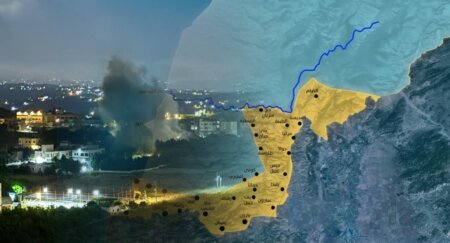
Our sources confirm that the Lebanese delegation held fast to its national constants, rejecting any new security arrangements aimed at enforcing the occupation’s equations on the ground. The delegation insisted that any discussion regarding the details of the army’s deployment, the exclusivity of weapons, and the implementation of a step-by-step mechanism for a gradual withdrawal will remain suspended or hypothetical unless a clear, firm, and comprehensive ceasefire decision is reached first. Conversely, the Israeli side stalled, demanding guarantees and timelines for demilitarization, revealing that its objective extends beyond the Litani to strike the “Badr Unit” and Hezbollah’s centers of gravity in the Galilee Panhandle.
Amidst this ambiguity, high-level diplomatic sources revealed to JNews Lebanon via the Washington-Beirut line that international circles are on the verge of marketing and adopting a new strategy known as the “Containment or Freezing Strategy” for Hezbollah’s weapons. This is intended as a flexible, practical framework for the principle of the exclusivity of weapons and the extension of state authority—a plan set on track awaiting the maturity of components for a grand regional settlement between Washington and Tehran to help the party “descend from the ladder of escalation.”
Salam Attacks the “Axis”
This diplomatic standoff coincided with a high-pitched political cry raised by Prime Minister Nawaf Salam. Following his evaluative meeting with President Aoun in Baabda, Salam emphasized that opting for negotiations is “the less costly option and not a surrender.” He directed sharp, direct criticism at Hezbollah (without naming it), calling on it to “retreat from unilateralism and halt the stubbornness so that the decision of war and peace remains a national Lebanese decision, not one outside the borders.” Meanwhile, MP Ali Fayyad insists on fierce resistance despite his recent public admission of an “imbalance in the balance of power,” ignoring the destructive cost, the ongoing occupation of villages, and the forced displacement of more than half a million southerners.
On the ground, the Lebanese Army was not safe from Israeli treachery; two army personnel were severely wounded after being targeted inside their vehicle by a drone strike in Nabatiyeh. This coincided with precautionary measures taken by the army command to temporarily evacuate the Khardali checkpoint for a few hours due to violent airstrikes surrounding the strategic Beaufort (Shaqif) Castle. The ground and air aggression expanded through terrifying booby-trapping and demolition operations in the town of Dibbine in Marjayoun, alongside an incursion toward the town of Ghandouriyeh from the eastern side of Wadi Al-Hujair. Violent airstrikes also rained down on Abba, Hariss, Khirbet Selm, Tefahta, Kfarhamam, and the towns of Machghara and Maydoun in the Western Bekaa for non-compliance with hysterical evacuation warnings. This raised the official death toll from the Ministry of Health to 3,371 martyrs and 10,129 wounded, countered by Hezbollah launching dozens of drones and 25 rockets toward Safed, Kiryat Shmona, and occupation sites.
Lebanon stands today between the whirlpool of a burning battlefield and international trade-offs, awaiting what the language of diplomacy will yield at the US State Department in 48 hours to see whether the nation will head toward anchoring its sovereignty or continue paying bloody prices.