




Exclusive JNews Lebanon
The southern suburb of Beirut (Dahieh), and along with it the heart of the capital, awoke to a bleak scene that brought the phenomenon of massive mass displacement back to the forefront. This followed a decisive Israeli mandate to resume direct strikes and issue consecutive evacuation orders. This destructive battlefield explosion comes just hours before the launch of the fifth round of political negotiations in Washington, where diplomatic decision-making corridors report a wide-open fiery bazaar opened by Tel Aviv with full coordination and backing from the US administration to impose surrender terms under fire. The official casualty figures, which have reached 3,433 martyrs and 10,395 wounded, clearly indicate that Lebanon is facing a highly brutal negotiating equation: either accept ending the state of war under American conditions or watch the capital burn.
Read also The Roundup- The Shaqif Shockwave: A Secret Israeli Plan to Strike Deep Within Beirut
Behind Closed Doors: Secrets of the “Rubio” Proposal and the Shock in Ayn al-Tineh
Private sources tell JNews Lebanon details of a highly secret and critical American mediation led by US Secretary of State Marco Rubio over the past 48 hours through intensive contacts that included Lebanese President Joseph Aoun and Israeli Prime Minister Benjamin Netanyahu. Our diplomatic information indicates that Rubio presented an urgent initiative calling for a partial ceasefire, under which Hezbollah would commit to an immediate and complete halt to all its attacks and rockets on northern Israel, in exchange for a parallel Israeli commitment not to bomb Beirut and the southern suburb, or expand the ground incursion.
Read also Exclusive-The Dahieh Shockwave: A Secret US-Israeli Plan to Eliminate Weapons
According to JNews diplomatic sources, President Joseph Aoun had received prior assurances of flexibility from Hezbollah and tried hard to crystallize this proposal and draft an understanding around it. However, the shocking surprise came from Ayn al-Tineh. American circles described the response of Speaker of the Parliament Nabih Berri as “evasive and disappointing,” given his inability to translate the positive atmosphere into binding practical steps for the party. Following this response, Washington informed the Lebanese negotiator in a decisive tone that it “does not expect Israel to continue tolerating the strikes, and that the fastest way to protect civilians is for the party to surrender field-wise and halt fire immediately.”
Diplomatic Mobilization and Ayn al-Tineh’s Attempts to Catch its Breath
In an attempt to salvage the collapsing Lebanese position, JNews sources for “In the Roundup” indicate that Speaker Berri’s media advisor, Ali Hamdan, rushed to inform the American side that Berri is ready to provide full guarantees regarding Hezbollah’s commitment to a comprehensive and immediate ceasefire. This diplomatic rush coincides with a firm conviction expressed by Berri in his meetings—the latest of which was with Walid Joumblatt in Ayn al-Tineh—that Lebanon is now in dire need of a “regional and Arab umbrella” led by the Kingdom of Saudi Arabia alongside Egypt, Qatar, and France to provide a safety net and a guarantee for implementing any upcoming agreement.
Read also Exclusive- Inside the Pentagon: What the Lebanese Delegation Told Israel
However, the Arab approach, specifically the quiet diplomacy of the Kingdom of Saudi Arabia, appears clear and firm. Despite Riyadh’s condemnation of the Israeli aggression and incursion, it stresses in its marathon contacts with the three presidents the inevitability of full commitment to the Taif Agreement as the sole reference to extend state sovereignty and restrict weapons and decision-making to the Lebanese Army, as a primary condition for any international roadmap for the day after.
The Clash of Arenas: Washington and Tehran in the Lebanese Boxing Ring
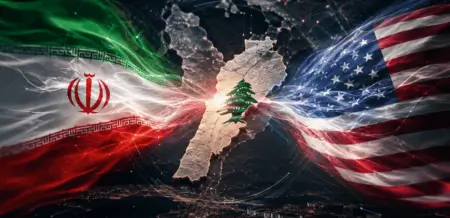
Parallel to the deadlock of negotiation channels, Lebanon has turned into a direct security and political clash arena between Washington and Tehran. The US administration accuses Iran of deliberately prolonging the war in Lebanon to improve its negotiating terms and claim credit for itself. The Iranian response came quickly with its negotiating delegation announcing the suspension of exchanging messages with Washington through mediators, raising the ceiling of threats by hinting at exploding other regional fronts such as the Bab al-Mandab Strait, and issuing warnings to the residents of northern Israel to evacuate if the bombing of Beirut continues.
Read also Exclusive – Between Peace and Collapse: JNews Reveals by Name Who Looted Depositors’ Money in 2019
Faced with this scene, the approach of Baabda, which is fiercely defended by President Joseph Aoun, seems to be the only realistic option to salvage what remains of the state. On the eve of the delegation’s departure to Washington, he stressed that going to negotiations is neither a surrender nor a concession, but rather the only sound option to prevent the demise of the nation. The country today stands before two tracks: either the option of the state and negotiations to reach an end to the war, or the option of unilateralism and stubbornness experienced by Hezbollah in a clear state of denial that brings nothing but catastrophic death and destruction to the country.