




Written by Joyce houeiss for JNews Lebanon
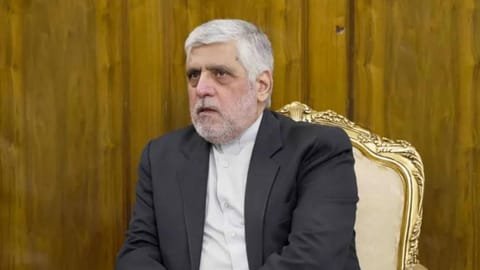
Following the regularization of his legal status through the General Directorate of General Security in Lebanon, the case of former Iranian envoy Mohammad Reza Sheibani has shifted from a complex diplomatic standoff into a model of reciprocal legal and political maneuvering between Beirut and Tehran. This step effectively closes the dispute over his official standing, adopting a resolution that balances the preservation of Lebanon’s sovereign decisions with maintaining an operational channel for Iran in the Lebanese capital.
Legal Framework and the Removal of Diplomatic Immunity
The measure taken by the General Directorate of General Security is grounded in Legislative Decree No. 10188 of 1962, which regulates the entry, stay, and exit of foreigners in Lebanon. Specifically, under Article 21, Sheibani was granted a temporary six-month residency as an ordinary foreign national based on a valid Iranian passport, without conferring any diplomatic title or official representation.
This procedural transition marks a decisive shift in his legal standing, entirely removing him from the protections of the 1961 Vienna Convention on Diplomatic Relations. Deprived of judicial, civil, and criminal immunity, Sheibani no longer holds document immunity or the right to utilize diplomatic pouches or official vehicular plates, placing him legally under the full jurisdiction of Lebanese law as a resident foreign national.
Strategic Dimensions of the Compromise Track
In political circles, this arrangement is interpreted as a containment formula that successfully averted a direct diplomatic rupture between the two states while yielding balanced outcomes for both sides:
From the perspective of the Lebanese state, the Ministry of Foreign Affairs maintained its sovereign stance by refusing to reverse the persona non grata designation or renew his previous diplomatic credentials. Beirut effectively transitioned the file from a direct diplomatic confrontation into a strictly administrative and security procedure under local executive authority.
For Tehran, the temporary residency provides a legal framework that prevents forced deportation or unlawful stay proceedings, allowing a senior strategic figure to remain present in Lebanon to monitor regional developments during a critical period.
Scope of Future Activities and Protocol Protocols
Despite his status as a “resident foreigner,” Sheibani’s political background and accumulated experience suggest his role will remain focused on non-official channels. Operationally, he will manage political coordination and communication outside formal diplomatic protocol between Iranian leadership and local partners, acting as a specialized political liaison rather than an accredited diplomat.
Conversely, this status establishes strict boundaries for Lebanese state institutions. Official state representatives and cabinet ministers are expected to abstain from formal public meetings with him to avoid protocol violations or granting implicit recognition to an unaccredited status. Furthermore, this residency remains subject to standard security oversight, with Lebanese authorities retaining the prerogative to revoke it should any regulatory violations occur.
The six-month window serves as a test period for the emerging parameters between Beirut and Tehran. Lebanon successfully upheld its sovereign prerogatives and international protocol standards under local law, while Tehran maintained an operational presence under temporary security clearance—establishing a new reality: a former envoy, without diplomatic immunity, under legal jurisdiction.