



Exclusive JNews Lebanon
Yesterday’s parliamentary session at Nejmeh Square proved to be a pivotal political milestone. While international attention remains focused on Rome—set to host the eighth round of Lebanese-Israeli negotiations in early September—domestic developments dominated local headlines. Key moments included a major human rights decision abolishing the death penalty, extensive debates surrounding the Lebanese Parliament Media Law, and procedural disagreements between Prime Minister Nawaf Salam and Minister of National Defense Michel Menassa regarding the proposed General Amnesty Law.
Cabinet Dynamics Surrounding the General Amnesty Debate
Parliamentary sources informed “Jnews Lebanon” that the procedural dispute between Prime Minister Nawaf Salam and Defense Minister Michel Menassa reflected broader constitutional discussions concerning executive representation and cabinet solidarity in legislative affairs.
According to sources obtained by “Jnews Lebanon”, Prime Minister Salam emphasized that under constitutional guidelines, the Prime Minister represents the unified stance of the cabinet during legislative proceedings. The resulting debate, alongside walkouts by parliamentary blocs, eventually led to a lack of quorum during the evening session before final consensus could be reached on the General Amnesty draft.
Human Rights Legislation and Press Law Revisions
In a historic legislative step, Parliament approved a bill officially abolishing the death penalty in Lebanon. Minister of Justice Adel Nassar described the decision to “Jnews Lebanon” as “a landmark moment that aligns national legislation with international human rights standards while enhancing international judicial cooperation.” The Hezbollah parliamentary bloc abstained and walked out during the vote.
Concurrently, Parliament reviewed the Media Law as reported by the joint parliamentary committees, rejecting 23 proposed amendments aimed at removing penal clauses for press activities. The Press and Editors’ Syndicates have called for a joint press conference today to address the legislative outcome and advocate for press freedoms.
Diplomatic Track: Preparation for the Rome Summit
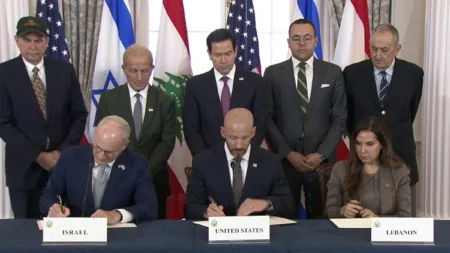
On the diplomatic front, a U.S. State Department official confirmed that the eighth round of negotiations will convene in Rome in early September. Preparatory talks are scheduled to continue across Beirut, Jerusalem, and Washington. During the upcoming technical sessions, Lebanese negotiators are expected to present detailed implementation roadmaps for security arrangements in designated zones.
In parallel, U.S. Ambassador to Lebanon Michel Issa, speaking from the Orthodox Patriarchate in Balamand following a meeting with Patriarch John X, expressed optimism regarding the diplomatic track. Ambassador Issa noted that negotiations are making steady progress toward regional stability. These remarks align with statement from the President of the Republic emphasizing that diplomatic dialogue remains the most viable path toward safeguarding national sovereignty and restoring stability in Southern Lebanon.
Assessing the Legislative and Diplomatic Landscape
A strategic review by Jnews Lebanon highlights three key dimensions of current domestic and foreign policy developments:
- Executive Representation: The discussions surrounding the General Amnesty Law underscore the necessity of maintaining cohesive executive leadership when presenting national security policy to Parliament.
- Legislative Framework for Press Freedoms: The decision to retain penal measures in the Media Law emphasizes the ongoing need for legislative reforms that protect investigative journalism.
- Sustained Diplomatic Engagement: Despite internal political debates, the international diplomatic framework leading to the Rome talks remains active, aiming for structured solutions along the southern border.
“Government Source to Jnews: Prime Minister Nawaf Salam’s intervention during the session sought to uphold constitutional procedure regarding government representation before Parliament.”