



Written by khoder Farhat for JNews Lebanon
The clock is ticking heavily toward this coming Friday, when the U.S.-Iran agreement is expected to see the light of day in Geneva, barring any unforeseen circumstances. As the signing ink nears the paper, the real ledgers for dividing regional influence are being opened behind closed diplomatic doors, putting the balance of profits and losses under the microscope. While various regional arenas appear capable of translating their influence into political gains, a haunting question emerges: Will Lebanon be the biggest loser in this historic settlement?
Read also Exclusive—Israeli Trap for Trump and Tehran in Beirut: Dahiyeh Strike Scrambles Deal Framework!
A $20 Billion Bill… and the Numbers Keep Climbing
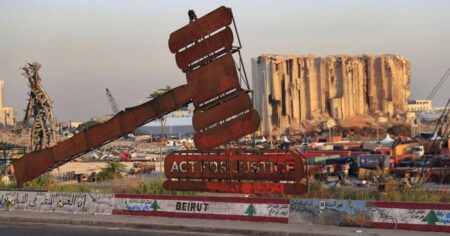
While initial drafts of the agreement speak of a permanent cessation of military operations across all fronts, including Lebanon, reading the reality through numbers paints a terrifying picture. Lebanon, already collapsing under the weight of widespread destruction and total economic paralysis, has far exceeded the initial bill set by former Finance Minister Yassine Jaber late last May, which estimated preliminary losses at $20 billion.
Read also Exclusive- A “Constitutional Trap” Threatens the Law to Cancel Exams: Have MPs Fallen into the Prohibitions of the “2020 Precedent”?
According to economic experts speaking to Jnews Lebanon, this figure is continuously rising due to the total halt of the production cycle, the massive drain of human capital, and the ongoing bleeding of infrastructure and economic institutions across the South, the Bekaa, and the Southern Suburbs of Beirut (Dahiyeh).
Exclusive Jnews Lebanon Inside Intelligence: The Treacherous Roadmap
Diplomatic sources deep within the decision-making corridors have exclusively revealed a series of intricate, behind-the-scenes realities to Jnews Lebanon regarding the preparations for the Geneva Accord:
- The Long-Term Truce Test for Hezbollah: Politically, Hezbollah faces the most significant challenge since its inception. If the agreement includes new security arrangements and a long-term truce, the group will find itself grappling with an existential relocation dilemma, given that its role has historically been tied to the direct proxy conflict between Washington and Tehran.
- The Unresolved Traps: “Calm Without Solutions”: Our sources warn that the agreement is not a magic wand but rather the “opening of a much wider negotiation track.” If unresolved files—such as weapons, final land border demarcation, and structural reforms—remain outside the immediate framework of solutions, Lebanon will live in a continuous cycle of “no war, no peace” without achieving any real gains.
The Reconstruction Dilemma: Why Geneva Won’t Be Like the “July 2006 War”
Sources tracking the file unanimously agree that the darkest aspect for Lebanon lies in the complete absence of any guaranteed financial blank check for reconstruction. Two specific points constitute the true nightmare for the Lebanese state:
1. Absence of Guaranteed Funding and Strict Donor Conditions
Unlike what happened after the July 2006 war, when Arab and international funds flowed rapidly into the country, the global financial climate looks vastly different and dry. To date, no international or regional entity has announced its willingness to bear the lion’s share of clearing the rubble. Traditional donor countries continue to peg every single cent to strict administrative, political, and economic reforms that Beirut has yet to implement.
Read also Behind the scenes- Secrets of the “Secret” Diplomatic Dinner
2. The Battle Over “Who Holds the Treasury”
The core dilemma, as revealed by our source to Jnews Lebanon, lies in the identity of the authority supervising the reconstruction funds. International donors flatly refuse to hand over a single penny to any official Lebanese government administration. Instead, they will strictly mandate that the disbursement and oversight mechanisms be handled directly under international supervision, a move bound to ignite a new internal political conflict over sovereignty and fund management.
Historical Comparison of Financial Support Mechanisms
| Point of Comparison | The July 2006 War Era | The Geneva Accord Era |
|---|---|---|
| Flow of Aid | Immediate and direct from Gulf states and the West. | Conditional upon complex negotiation tracks and deep structural reforms. |
| Supervising Authority | Dominated by government bodies and the Council of the South. | Absolute international insistence on direct donor supervision. |
| Regional Priority | Lebanon was at the very top of the international priority list. | The Lebanese file is secondary compared to the broader priorities of Tehran and Washington. |